
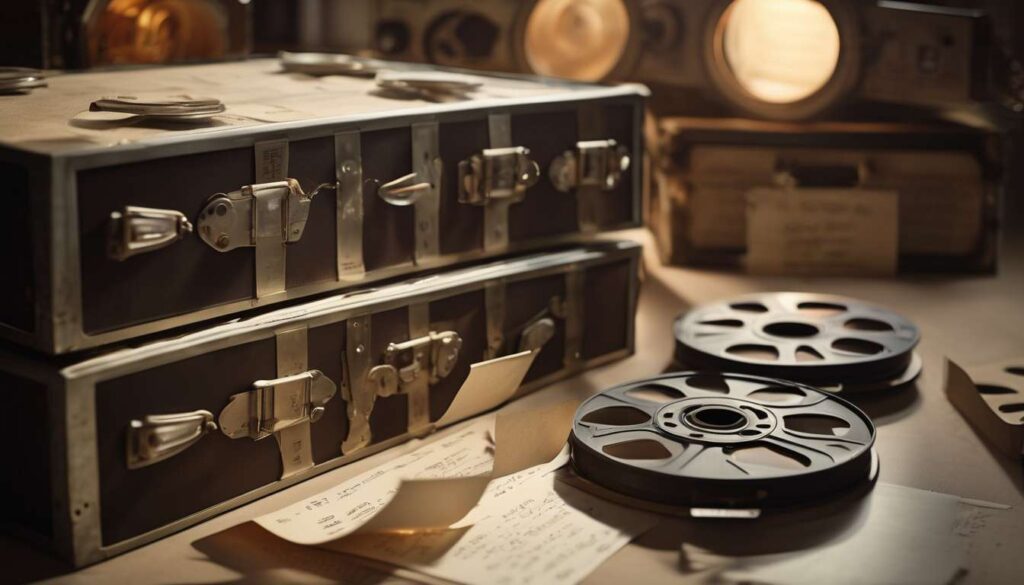
Granular archival work is as vital to understanding adult film history as it is controversial.
We assert that digital preservation reframes the narratives long excluded from mainstream cultural records, rescuing production notes, distribution logs, and creator interviews from loss.
As researchers, curators, and participants, we recognize the ethical and technical challenges inherent in conserving material that society often stigmatizes; nonetheless, we insist these artifacts matter for media studies, labor history, and sexual culture.
By digitizing fragile reels, cataloging metadata, and preserving context around credits and censorship, we recover practices, economies, and personal stories otherwise erased.
Our efforts also force institutions to reconsider access policies, privacy concerns, and the balance between preservation and harm.
This article charts methods, debates, and case studies demonstrating how digital stewardship transforms adult film from marginalized ephemera into a documented, analyzable strand of twentieth- and twenty-first-century media history.
Archival Imperatives
Goal: identify and preserve the most significant materials from adult film production — scripts, raw footage, marketing materials, contracts, and contextual records — so future researchers can understand the industry’s practices, people, and cultural impact.
Select intentionally with shared purpose. We will prioritize materials that document creative processes, labor relations, distribution, and audience engagement.
Adopt consistent metadata standards. Every item will be made discoverable and interpretable across institutions.
Document provenance, rights, and technical characteristics. Clear documentation will help prevent loss, misinterpretation, and legal confusion.
Design an access policy that balances openness with privacy and consent. Access rules will ensure those represented feel safe contributing to and using the archives.
Commit to interoperable formats, routine integrity checks, and collaborative curation. These practices strengthen community trust and scholarly value.
Invite peers, creators, and rights holders to participate. We seek partners to help shape a lasting, responsible archive that reflects our shared history and supports future inquiry.
Ethical Considerations
We must weigh privacy, consent, and potential harm alongside scholarly value when deciding what to collect, describe, and share.
We recognize that digital preservation of adult movie production history carries responsibilities to performers, creators, researchers, and communities.
We commit to informed consent practices, redaction when appropriate, and clear provenance records so people can trust our stewardship.
We adopt metadata standards that respect individuals’ identities and contexts, avoiding stigmatizing terms and recording consent status and restrictions.
- Record consent status and any use restrictions with each descriptive record.
- Prefer neutral, person-centered language and allow for name changes, pronouns, and aliases.
- Include provenance and context fields explaining how materials were created and acquired.
We develop an access policy that balances openness with protections—tiered access, age verification, and researcher agreements—so members feel safe contributing and using the material.
- Implement tiered access levels (e.g., open, restricted researcher, staff-only).
- Require age verification and signed researcher agreements for sensitive tiers.
- Apply time-limited or case-by-case access where necessary.
We engage affected communities in policy development, creating feedback loops that honor lived experience.
- Convene community advisory groups and solicit periodic feedback.
- Incorporate community recommendations into metadata, access, and retention policies.
- Provide clear complaint and redress mechanisms.
We document ethical decisions transparently, so future users understand why certain items are restricted or contextualized.
- Maintain a public log of ethical reviews, redactions, and access decisions.
- Attach explanatory statements to restricted or contextualized items.
By centering respect, accountability, and community input, we ensure our digital preservation work supports scholarship without causing unnecessary harm.
Technical Workflows
High-level goal
We create repeatable, auditable technical workflows to ensure secure ingest, reliable storage, and verifiable provenance for adult movie production materials.
Checklist-driven ingestion
-
File validation
- Verify files open and meet expected technical criteria (codec, resolution, bit depth).
- Reject or flag corrupted or incomplete files.
-
Format normalization
- Transcode or rewrap as needed to agreed preservation and access formats.
- Preserve originals in an immutable master store.
-
Checksum generation
- Generate and record cryptographic checksums (e.g., SHA-256) at ingest and on copies.
- Store checksums in manifest files tied to each asset.
-
Secure transfer
- Use encrypted channels (TLS, SFTP, or VPN) and authenticated endpoints.
- Employ transfer checks (size, checksum) to confirm integrity after transfer.
Documentation and human oversight
-
Document each action
- Log who performed each step, when, and why.
- Keep readable runbooks and checklists so team members feel confident and included.
-
Automate routine steps
- Automate validation, checksuming, and routine transfers while preserving human approval gates for sensitive decisions.
Preservation and storage
-
Redundant storage
- Store masters across geographically separated systems or providers.
- Use a mix of online, nearline, and offline tiers as appropriate.
-
Regular integrity checks
- Schedule periodic fixity checks against stored checksums.
- Alert and remediate on mismatch with documented recovery steps.
-
Migration and refresh planning
- Track format obsolescence and plan migrations well before risk.
- Maintain versioned copies and migration logs.
Metadata and provenance
-
Embed descriptive and technical notes
- Ensure metadata travels with assets through handoffs (descriptive, technical, rights/provenance).
- Reference institutional metadata standards at handoff points (schemas not detailed here).
-
Provenance recording
- Maintain audit trails for creation, modification, transfers, and access events.
Access controls and policy gates
-
Role-based access
- Enforce least-privilege access by roles and responsibilities.
- Require approvals for sensitive retrievals.
-
Logging and review
- Log all access and administrative operations.
- Regularly review logs and access requests for policy compliance.
-
Respect for contributors and communities
- Build policy gates and review workflows that consider consent, privacy, and community norms.
Iteration, testing, and stakeholder engagement
-
Run tabletop exercises
- Simulate incidents and handoffs to validate procedures and decision paths.
-
Stakeholder iteration
- Update workflows with feedback from technical, legal, and community stakeholders.
-
Accessible documentation
- Keep policies, runbooks, and training materials discoverable and up to date.
Outcome
Together, these practices produce repeatable pipelines that balance technical rigor (validation, redundancy, integrity checking, migration) with human-centered controls (documentation, oversight, consent-aware access policies) to manage sensitive production materials responsibly.
Metadata Standards
We will adopt interoperable metadata standards that capture descriptive, technical, rights, and provenance information so assets remain discoverable, usable, and auditable across systems and over time.
We agree on common schemas—Dublin Core, PREMIS, and schema extensions tailored to adult movie production—to ensure consistent descriptions of performers, production dates, formats, and contextual notes.
We will tag technical details (codecs, resolution, checksums) to support long-term integrity and migration planning.
We will record rights and consent metadata that align with our access policy so permissions and restrictions travel with each file and support responsible use.
We will document provenance—original sources, transfers, and editorial changes—to enable accountability and trust among contributors.
We will automate metadata capture at ingest and allow community curation so everyone feels invested in accuracy and completeness.
We will use controlled vocabularies and persistent identifiers to prevent fragmentation and make collections interoperable with libraries and archives.
By committing to these metadata standards, we build a shared infrastructure that keeps our community connected, respected, and confident in the longevity of this cultural record.
Case Studies
We’ll examine a series of case studies that illustrate how our metadata, rights recording, and technical workflows have preserved, clarified, and made accessible different strands of adult movie production history.
We present three focused examples:
- An independent studio archive rescued from degrading tapes.
- A performer-led collection seeking ethical provenance.
- A regional distributor whose catalogs revealed shifting production networks.
In each case, we applied core practices to enable responsible stewardship:
- Digital preservation practices (stabilization, format migration, and secure storage).
- Alignment of descriptive fields with established metadata standards to ensure consistent cataloging.
- Rights documentation so access and reuse decisions could be made transparently.
We worked collaboratively with contributors, centering trust and shared responsibility, so everyone felt included in shaping the record.
Our methods produced concrete outcomes:
- Clarified provenance and resolved conflicting credits through documented decision trails.
- Targeted discovery that avoided exposing sensitive details by using layered access controls and redaction where appropriate.
- Interoperability testing across repositories to ensure records travel with context intact and retain meaning.
These case studies show practical benefits:
- Stabilized masters that protect original materials from further degradation.
- Richer searchability via enhanced metadata and controlled vocabularies.
- Community-affirming records that let researchers and participants trace creative lineages.
They demonstrate how precise policies and technical care make history retrievable and respectful.
Access Policies
We define clear, tiered access policies that balance researchers’ needs with performers’ privacy and legal rights.
We create an access policy that’s transparent, consistent, and respectful so everyone who contributes or studies this history feels included.
We recognize that digital preservation demands not just file storage but careful control over who sees sensitive content and when.
We use metadata standards to record provenance, consent status, age verification, and restrictions, so access decisions are auditable and fair.
We provide graduated levels of access that match legal obligations and individual privacy wishes:
- Open access.
- Registered researcher access.
- Restricted archival use.
We document appeals and review procedures and commit to periodic policy audits as laws and community expectations evolve.
We train staff and volunteers in ethical access, and we communicate criteria clearly to contributors, performers, and scholars.
By combining rigorous metadata standards with a humane access policy, we protect people, support research, and build a shared, trustworthy archive of adult movie production history.
Community Collaboration
We will build partnerships with performers, producers, researchers, and community groups to co-create respectful, usable archives and governance practices.
We will invite stakeholders into every stage of digital preservation, sharing decision-making so archives reflect lived experience and collective priorities.
We will agree on metadata standards together, ensuring descriptive fields respect identities, consent, and context while enabling discoverability.
- Define metadata fields collaboratively.
- Include identity and consent metadata.
- Balance contextual richness with searchability.
We will set an access policy collaboratively, balancing openness with privacy, legal constraints, and participant safety.
- Co-determine who can view, download, or reuse materials.
- Create tiered access levels when necessary.
- Include processes for redaction, takedown, and emergency restrictions.
We will offer training and shared tools so contributors can document materials consistently and confidently.
- Provide workshops, guides, and templates.
- Offer tools that simplify standardized capture and metadata entry.
- Support capacity-building for community partners.
We will host regular forums where community members review procedures, suggest revisions, and resolve disputes transparently.
- Schedule periodic review meetings.
- Publish agendas and outcomes.
- Use clear dispute-resolution processes.
We will document contributions and attribution practices so labor is visible and valued.
- Record contributions (who did what and when).
- Agree on citation and credit conventions.
- Recognize non-author labor (e.g., community liaisons, transcribers).
We will pursue interoperable formats and clear workflows so materials remain usable across institutions.
- Choose open, well-documented file formats.
- Publish ingest/export workflows and preservation actions.
- Test interoperability with partner systems.
We will establish feedback loops so the archive evolves with the community’s needs, and we will publish governance records so trust grows from accountability.
- Collect ongoing feedback and implement iterative changes.
- Publish governance minutes, policies, and version histories.
- Monitor and report on outcomes and impact.
Together, we will sustain an archive that honors creators, supports research, and fosters belonging through shared stewardship.
Future Directions
Looking ahead, we’ll explore scalable, ethical innovations and partnerships that ensure the archive stays resilient, relevant, and responsive to community needs.
We’ll prioritize digital preservation strategies that balance long-term storage with community-driven priorities, so everyone who contributes feels seen and valued.
We’ll adopt clear metadata standards to make materials discoverable and to honor creators’ context, consent, and provenance.
We’ll build an access policy grounded in respect, safety, and inclusion, defining who can view sensitive items, how requests are handled, and how anonymization or restricted tiers work.
We’ll pursue interoperable systems and shared infrastructure to reduce duplication and lower costs, inviting institutions, creators, and users into governance roles.
We’ll invest in training and toolkits so contributors from diverse backgrounds can participate confidently.
We’ll evaluate emerging tech—AI for description, blockchain for provenance—through ethics reviews and pilot projects, ensuring utility without harm.
By aligning technical rigor with community care, we’ll keep the archive trustworthy, useful, and welcoming for the people whose histories it preserves.
How do copyright laws specifically affect the digitization and public sharing of adult films produced before the internet era?
Short answer: Copyright laws treat adult films produced before the internet era the same as other audiovisual works: if a work is still under copyright you generally cannot digitize, reproduce, distribute, or publicly display it without permission from the rights holder, unless a clear legal exception (rarely) applies.
Key points to consider:
1. Copyright duration and public domain status
- Copyright length depends on jurisdiction.
- In many countries, copyright lasts for the life of the author plus 50–70 years; for corporate or anonymous works it may be a fixed term (often 95–120 years from publication in some systems).
- Check whether the film is in the public domain before digitizing or sharing. Public domain works can be digitized and shared freely.
2. Identifying and locating rights holders
- Rights may be held by the original producer, production company, distributor, or successor entities (including companies formed after mergers).
- Contracts, credits, and trade publications can help identify holders.
- If rights are unclear or the holder cannot be found (“orphan works”), treat the work as still copyrighted and avoid public sharing unless your jurisdiction has an orphan-works regime that allows limited use after a good-faith search.
3. Licensing and permission
- To digitize and publicly share a copyrighted adult film, obtain licenses covering reproduction, distribution, public display, and any relevant performance or moral-rights clearances.
- Licenses should be written and specify permitted uses, territories, term, formats, and whether derivative works are allowed.
- Obtaining permission is the safest path.
4. Fair use / fair dealing and other exceptions
- Some jurisdictions have exceptions (e.g., U.S. fair use) that might permit copying or limited sharing for purposes such as criticism, scholarship, news reporting, or preservation by libraries/archives.
- These defenses are fact-specific and not a blanket permission — consider: purpose (commercial vs. noncommercial), nature of the work, amount used, and market effect.
- For adult films, courts may weigh factors differently; relying on fair use is risky without legal analysis.
5. Orphan works and restricted access workflows
- Where rights are unclear and you need to preserve or study material, use workflows that minimize legal risk:
- Conduct and document a reasonable search for rights holders.
- Keep digitized copies but restrict access (on-site only, password-protected, limited research access).
- Use metadata to record provenance, search effort, and restrictions.
- Many institutions adopt restricted-access policies for orphan works rather than public distribution.
6. Privacy, performer rights, and related issues
- Beyond copyright, performers may have personality, privacy, or publicity rights — these can restrict use or create additional permission requirements.
- Older releases might lack signed releases for later formats; confirm that performer consents cover digitization and online sharing.
7. Content safety, community standards, and platform rules
- Even with copyright clearance, platforms and institutions may restrict adult content for policy or safety reasons.
- Plan moderation, age-gating, and legal compliance for obscenity laws.
8. Risk management and documentation
- Keep thorough records of rights searches, license agreements, takedown responses, and access controls.
- When in doubt, restrict public access and consult counsel. Legal advice is recommended for non-trivial projects.
Recommended practical steps
- Determine copyright status and public domain status in your jurisdiction.
- Search for and contact rights holders; obtain written licenses that cover digitization and distribution.
- If rights cannot be found, perform a documented good-faith search and consider restricted-access archiving under your institution’s orphan-works policy.
- Assess performer releases and privacy/publicity issues.
- Consider fair use only after a case-by-case legal assessment.
- Keep detailed metadata and legal documentation for every item.
- Consult an attorney before public distribution or any commercial exploitation.
Bottom line: Treat pre-internet adult films like any other copyrighted audiovisual works: confirm rights (or public domain), obtain permission for digitization and sharing, or limit access and seek legal advice if rights are unclear.
What measures are taken to protect the identities and consent of performers in archival materials where consent records are missing or ambiguous?
We acknowledge the current question about protecting identities and consent when records are missing or unclear.
We prioritize performer dignity:
- We redact faces and identifying marks.
- We restrict access to material to authorized personnel only.
- We add clear warnings about uncertain consent and potential risks.
We seek alternative evidence of consent:
- We look for contracts, correspondence, production notes, and witness statements.
- We consult community representatives and ethics boards for guidance.
- We favor takedown or anonymized use when consent cannot be verified.
We document decisions transparently:
- We record the reasons for any decision, the evidence reviewed, and who was consulted.
- We retain only minimal metadata necessary for accountability and future review.
- We pursue outreach to locate consent when it can be done safely and ethically.
We treat performers’ safety and agency as paramount:
- When in doubt, we err on the side of protecting the individual — removing, anonymizing, or restricting access to the material.
How do archivists determine which adult productions are culturally or historically significant enough to preserve when resources are limited?
We weigh cultural and historical significance by focusing on representation, innovation, and community impact.
We prioritize works that reflect social change, marginalized voices, notable creators, and technical or aesthetic milestones.
We consult stakeholders, scholars, and community members, balancing legal, ethical, and resource constraints.
We document provenance and context thoroughly, and we make transparent selection criteria so communities feel included and decisions stay accountable and responsive to evolving values.
Conclusion
You’ve seen why preserving adult movie production matters: it documents culture, labor, and creative practice.
You’ll balance ethical duties — consent, privacy, and harm reduction — with technical workflows and robust metadata to ensure discoverability.
You’ll adopt access policies that protect participants while enabling research, and you’ll collaborate with communities, archivists, and technologists to stay accountable.
Moving forward, you’ll prioritize sustainable practices, transparency, and adaptability to keep this complex historical record safe and usable.